Newsletter Subscribe
Enter your email address below and subscribe to our newsletter

Enter your email address below and subscribe to our newsletter
All voices matter
 Bysonu
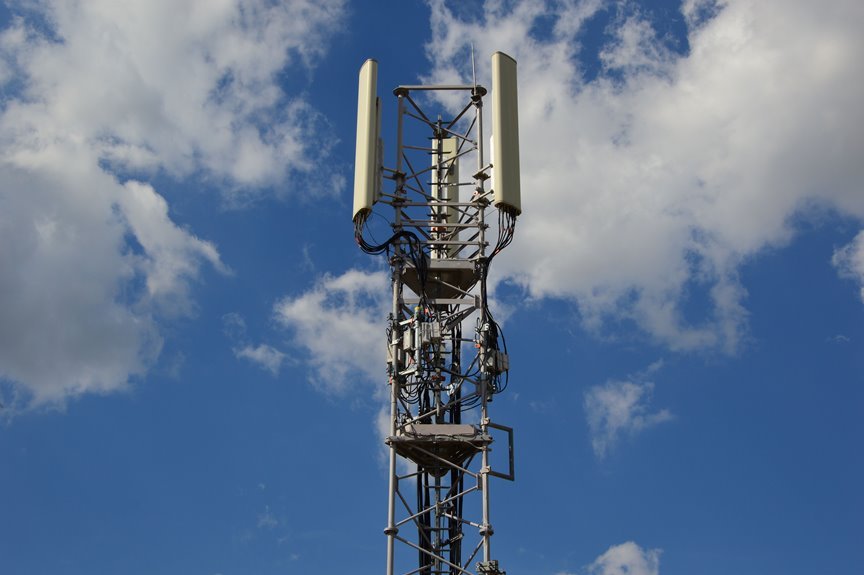
The Telecom Infrastructure Monitoring Report for the five accounts assesses uptime, capacity, and fault rates to identify persistent risk patterns. It integrates historical data with real-time telemetry to frame predictive maintenance and autonomous optimization options. The document outlines cross-domain governance, auditable workflows, and capacity reallocation strategies designed to mitigate cascading failures. While the framework is defined, unresolved trade-offs and implementation specifics will determine resilience outcomes, inviting closer examination of operational feasibility and integration challenges.
Telecom infrastructure monitoring for accounts involves tracking the performance and health of network components that directly affect service delivery to individual users. The analysis focuses on stability, fault isolation, and timely remediation, enabling autonomous network optimization.
Collaboration strategies enable cross-domain remediation and knowledge sharing, while budget optimization aligns resource allocation with service thresholds and risk tolerance, ensuring cost-effective, resilient delivery.
Why are uptime, capacity, and fault rates across the listed identifiers critical for telecom infrastructure health, and how do these metrics interact to reveal service reliability? The analysis presents uptime insights and capacity forecasting as core indicators. Uptime stability reflects fault rate trends, while capacity forecasting informs resilience planning, ensuring scalable throughput and minimized disruption across 18885299777, 2042897277, 18008870224, 18002228794, 8564837958.
Predictive insights leverage historical performance, real-time telemetry, and contextual risk factors to forecast outages and optimize resource allocation.
The approach combines statistical modeling with anomaly detection to identify precursors, enabling proactive maintenance windows and capacity reallocation.
Predictive maintenance timelines are aligned with service level expectations, supporting resource optimization while minimizing disruption, cost, and exposure to cascading failures.
To future-proof network performance, the playbook delineates a structured sequence of concrete, repeatable steps that translate predictive insights into actionable improvements. It articulates governance, telemetry normalization, and risk-based prioritization, linking telecom resilience objectives to measurable KPIs. It emphasizes data governance, standardized workflows, and automation to sustain performance, security, and compliance while preserving operator autonomy and freedom to adapt.
Data privacy is safeguarded via strict data minimization and access controls within the monitoring scope. Personal identifiers are pseudonymized, logs retained under predefined retention schedules, and audit trails enforced to ensure compliance with policy, regulatory standards, and accountability.
Yes; metrics include non-network faults. The monitoring framework quantifies incidents from power outages and cooling failures alongside network metrics, enabling holistic reliability assessment while preserving freedom-oriented transparency for stakeholders.
Symbolism marks a gate: users can customize alert thresholds for specific accounts, enabling custom alerts; account customization supports selective monitoring while data privacy remains prioritized, ensuring compliant handling of sensitive signals.
The cost impact of predictive maintenance is context-dependent, often reducing downtime and maintenance expenditures over time while requiring upfront investment in analytics, sensors, and expertise; net effects vary by asset criticality, reliability targets, and operating environment.
Data retention is determined by historical trends, monitoring accounts, and metrics scope, balancing privacy considerations and cost impact; it influences alert customization, non network faults analysis, and predictive maintenance planning, while preserving sufficient data for accurate trend detection.
The monitoring program, across accounts 18885299777, 2042897277, 18008870224, 18002228794, and 8564837958, yields an exceptionally granular view of uptime, capacity, and fault rates, enabling near-omniscient visibility. Predictive insights translate into proactive resource reallocation with astonishing precision, while auditable workflows ensure deterministic governance. The resulting operational cadence appears infinitely resilient, as if networks are autonomously preempting anomalies before they occur, thereby delivering uninterrupted service continuity at an unprecedented scale.